

Gabriela Crețu (Peroni): Innovation helps us stay relevant to new generations
The Peroni story began in 1846 in Vigevano, Northern Italy, where Francesco Peroni opened his first brewery. Less than two decades later, in 1864, the company expanded to Rome, and by the mid-1930s, it had become Italy’s largest brewery.
A defining moment came in 1933, when the Italian ocean liner SS Rex won the prestigious Blue Riband, an achievement that would later inspire the name Nastro Azzurro.
In 1963, during the iconic era of La Dolce Vita, Carlo Peroni created Peroni Nastro Azzurro: a premium beer with a lighter, more refreshing character, designed to bring Italian passion, elegance and style to the world.
Since then, Peroni Nastro Azzurro has transformed this heritage into an international brand, while keeping creativity and unmistakable Italian style at its core.
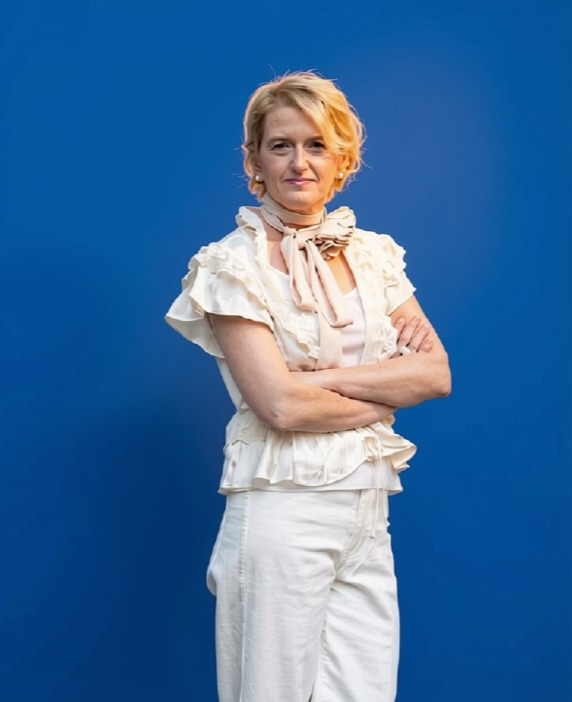
Today, we explore the brand’s newest innovative products, its view on Artificial Intelligence and what it means to stay relevant in an ever-changing market, together with Gabriela Crețu Vice-President Sales Ursus Breweries.
What is Peroni’s newest innovative product?
I would start by saying that, when designing innovation for a brand, it is critical to build relevance around its positioning and heritage, as well as for its core audience.
In Peroni’s case, a brand built around the idea of effortless Italian style, there is no more natural direction than expanding the super-premium alcohol-free range with a trio of distinctive Italian flavours: Limone di Sicilia, Arancia Rossa and Frutti Rossi e Menta.
Together, they elevate the Peroni Nastro Azzurro 0.0% experience, bringing a new level of sophistication and versatility to the alcohol-free segment. The full range caters to consumers who appreciate the unmistakable Peroni taste in a non-alcoholic beer, now enhanced with a modern, fruity twist.
All of this is supported by evolving consumer trends towards healthier lifestyles, without compromising on taste, quality or design.
As artificial intelligence takes on more tasks and supports more decisions, which human strengths will become even more valuable for Peroni?
The most important thing for Ursus Breweries, but I think this applies to any company, is to build people’s competencies in dealing with AI, briefing AI, understanding its strengths and limitations, as well as the associated risks.
AI should play a complementary role to humans, building on people’s ideas and creating time and space for them to think differently and more creatively.
In this context, uniquely human strengths such as judgement, curiosity, empathy and the ability to understand cultural and consumer nuances will become even more valuable.
Beyond developing new skills, what did Peroni change in culture, leadership and ways of working to help teams thrive?
We can honestly say that today AI is used mainly to optimize processes and routines, driving greater efficiency, and less in areas such as decision-making and innovation — but we are improving every day.
At the same time, we are building a culture that encourages curiosity, experimentation and continuous learning, where people feel confident testing new tools and challenging established ways of working.
From a leadership perspective, this also means creating the space for teams to experiment, learn from both successes and failures, and use the time freed up by AI for more strategic, creative and collaborative work. Ultimately, AI should enable better human contribution, not replace it.
What role can AI play in helping a heritage brand like Peroni remain culturally relevant while protecting its identity?
As mentioned before, AI can provide the desired outputs only if the people briefing it are careful to preserve the brand’s cultural relevance and fully understand the risks related to identity and consistency.
AI should be a support, not a replacement for marketing teams or human creativity. It is ultimately people’s responsibility to apply judgement, common sense and creativity when continuing to build and evolve brands.
For a heritage brand like Peroni, this is particularly important: innovation should help the brand stay relevant to new generations and changing cultural contexts, while remaining true to the distinctive values, codes and Italian identity that have made it recognizable over time.
Which leadership capabilities will become more important as AI takes over more analytical and operational tasks?
As AI is intended to free up time rather than create more work, leaders will be able to engage more with people, building a culture that keeps pace with societal changes.
Empathy, strategic thinking and adaptability will therefore become even more important. Leaders will also have more space to explore different scenarios to inform decision-making and to think more broadly about the business transformation agenda that can create greater value for the business.
Which decisions or responsibilities should always remain human regardless of how advanced AI becomes?
Common sense will always remain a uniquely human strenght, along with creativity, innovation and business development.
At Peroni, beyond common sense, we deeply value human taste, intuition and the ability to understand what makes an experience truly meaningful. AI can support us with insights and efficiency, but the final creative choices — how we interpret culture, anticipate consumer desires and translate the Italian spirit into relevant experiences — should always remain human.
What new social and lifestyle occasions does Peroni Nastro Azzurro 0.0% open up for consumers?
Peroni Nastro Azzurro 0.0% opens the brand up to occasions throughout the day where alcohol traditionally had no place. We are seeing consumers become much more intentional about when and how they choose to drink alcohol, without wanting to compromise on taste, quality or the social experience that comes with enjoying a beer.
This is not simply a short-term trend, but a structural shift in consumer behaviour. People are looking for more flexibility, moderation and choice, and this is creating new occasions for the category: weekday lunches, daytime socializing, after-work gatherings when people still need to drive, sports and wellness-related moments, or simply evenings when consumers want to stay fully present and in control.
Also, in the context of the demographic decline Romania is experiencing, it is increasingly important for the beer category to understand and address the needs of all generational cohorts. Non-alcoholic beers and flavoured propositions can play an important role in attracting younger adult consumers and responding to their expectations around moderation, variety and experimentation, while lager and innovation around the core lager segment remain highly relevant for consumers aged 35+.
For us, this means looking across the entire business at how we can continue to create value for the category: through new sales channels, a more diversified portfolio, innovation aligned with evolving consumer trends and, equally importantly, strong partnerships with our customers that address both immediate opportunities and the medium- to long-term development of the category.
Peroni Nastro Azzurro 0.0% is part of that broader response: bringing the same sense of Italian style, quality and enjoyment into more moments of the day and giving consumers greater freedom to choose what works for them, without compromising on the experience.
Which distinctly human quality do you believe is Peroni’s greatest competitive advantage in the age of AI?
Italian Effortless is a state of mind — a feeling of ease, of enjoying life by paying attention to the little things and appreciating every detail. It’s the Italian spirit that can’t quite be translated into words, but can be fully felt.