
PPC Romania is a leading integrated energy company, part of the PPC Group, a European PowerTech serving better living in South-Eastern Europe.
PPC companies in Romania span the entire energy value chain, from renewables production, energy distribution to supply and electric mobility
PPC also takes pride in being an educator in the energy transition through long-term investments and innovation.
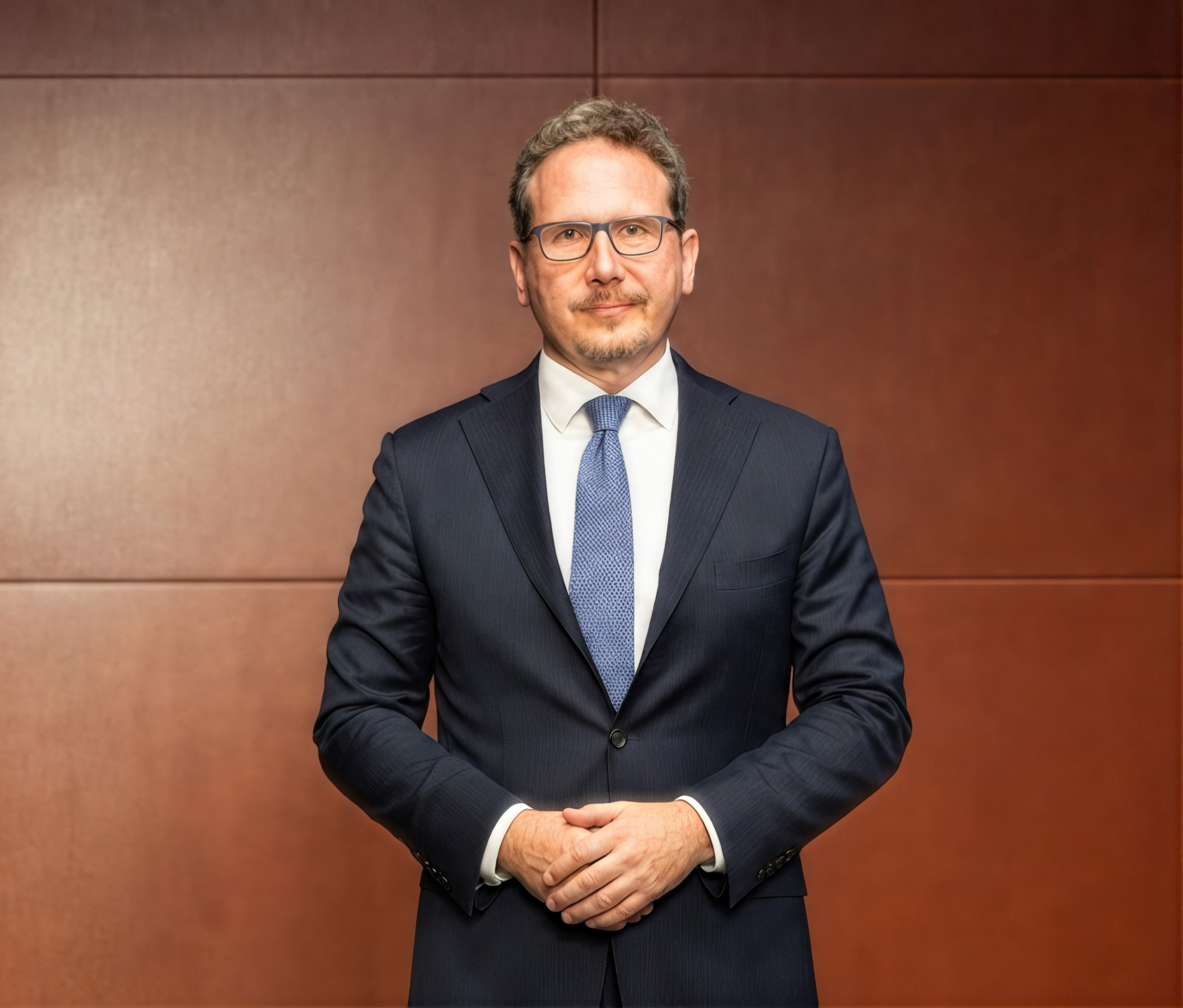
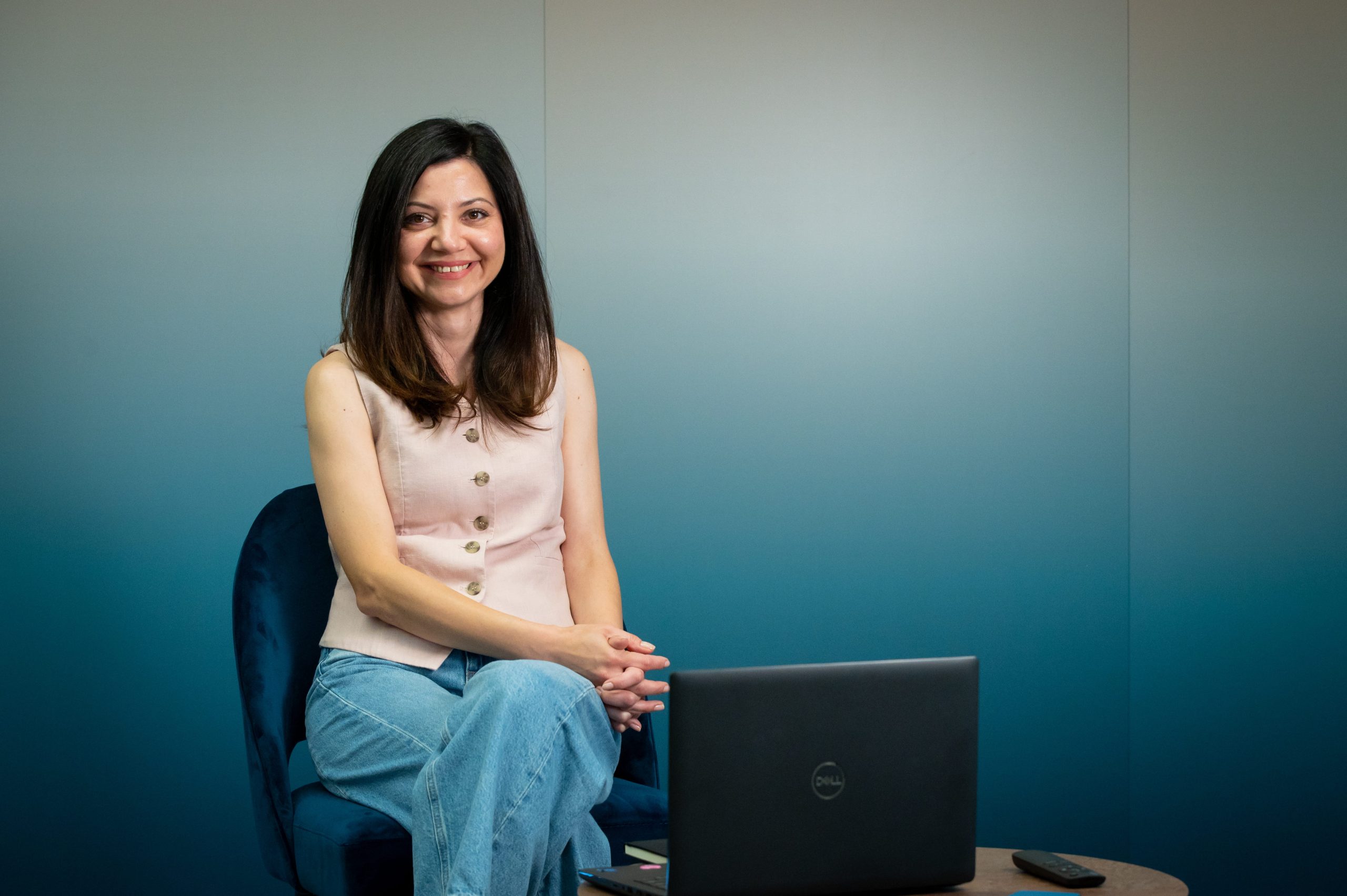
We welcomed Denisa Chelu Director People & Organization, PPC Romania for an interview on the future of energy, the role of AI and the company’s leadership challenges.

As artificial intelligence takes on more tasks and supports more decisions, which human strengths will become even more valuable for PPC?
One of the biggest misconceptions about AI is that the future belongs to those who have access to the best technology. Technology is rapidly becoming accessible to everyone. What will differentiate organizations is how effectively they combine technology with human potential.
At PPC, we don’t believe AI shrinks the value of people, we believe it raises it, for everyone who learns to direct it right. That’s also why we think critical thinking will become more valuable than expertise alone. For decades, expertise was built on having access to information and today information is abundant. What remains scarce is the ability to interpret complexity, challenge assumptions, make decisions in uncertain environments, and take responsibility for the outcome.
For PPC, this is particularly relevant as we pursue our ambition of becoming a leading PowerTech company. The future will require people who can successfully connect energy expertise with digital capabilities, while keeping customers, communities, and business impact at the center of every decision.
This is why I believe curiosity, adaptability, and continuous learning will become increasingly important. The pace of technological change means that the ability to learn may soon become more valuable than what we already know.
At the same time, empathy and collaboration will remain critical, because the most important challenges we face can no longer be solved by a single function, discipline, or technology.
Ultimately, AI will make organizations faster and smarter. But technology alone will not define the future. People will continue to provide direction, context, and purpose.
As technology becomes more powerful, leadership becomes more human.
Beyond developing new skills, what did PPC change in culture, leadership and ways of working to help teams thrive?
Digital transformation is often perceived as a technology challenge. In reality, it is fundamentally a leadership and organizational challenge.
At PPC, we recognized early that developing digital skills alone would not be enough if the organization continued to operate through traditional structures and ways of working. As we advance our ambition of becoming a leading PowerTech company, we have deliberately focused not only on capabilities, but also on culture, leadership, and organizational agility.
One of the most important shifts has been moving from expertise-based silos toward cross-functional problem solving. The challenges shaping the future of energy no longer belong to a single function. They sit at the intersection of technology, operations, customer experience, sustainability and business strategy. Creating value increasingly depends on our ability to bring different perspectives together and solve the right problems collectively.
Leadership is evolving as well. For decades, leaders were expected to have the best answers. Today, access to information and recommendations is becoming increasingly abundant. We believe the role of leaders is shifting from directing to enabling: creating clarity in complexity, empowering teams to make decisions and building environments where people feel confident challenging assumptions and testing new ideas.
At the same time, we are rethinking how learning happens inside the organization. In a world where technology evolves continuously, learning can no longer be treated as a separate activity. It has to become part of the way work gets done.
Our goal is not simply to prepare people for today’s jobs, but to build an organization capable of continuously reinventing itself as the future of energy and technology continues to evolve.
How is technology helping PPC teams make better decisions, develop stronger ideas and create more value for customers?
For many years, technology was primarily used to automate work. Today, its role is becoming far more strategic. It is increasingly helping organizations make better decisions, generate stronger ideas and solve problems that were previously impossible to solve.
In a sector as complex as energy, the volume of data, the pace of change and the number of variables influencing decisions continue to grow. Technology enables our teams to transform data into actionable insights, identify opportunities earlier, anticipate risks more effectively and make decisions with greater speed and confidence.
However, we believe the greatest value of technology does not come from making existing processes faster. It comes from helping us rethink how value is created.
The energy sector is becoming increasingly digital, connected and customer-centric. By combining advanced analytics, automation, digital platforms and AI with deep operational expertise, we can better understand customer needs, identify opportunities earlier and design solutions that create more relevant and meaningful experiences.
Technology is also changing the way innovation happens. Ideas can be tested faster, collaboration can happen more seamlessly across functions and solutions can scale more quickly than ever before. This allows us to spend less time validating assumptions and more time creating value.
At PPC, we see technology as an accelerator of transformation rather than simply a tool for efficiency. The more we automate repetitive tasks and augment decision-making, the more our people can focus on what creates real differentiation: solving customer problems, improving experiences, driving innovation and keeping the system reliable while we scale renewables.
How did PPC create environments where high performance and team well-being reinforce each other in an increasingly automated world?
I think the two only compete when you treat performance as results at any cost. We’ve tried to build the opposite: a culture where care for people, for our customers, for the impact we have on the community, is part of who we are, not a slide in a strategy deck.
That includes being honest that worry or doubt is not a weakness, and that asking for help is not either. Practically, this means real conversations rather than top-down directives, giving teams room to experiment and sometimes get it wrong, and admitting that agility and innovation come from people who feel safe enough to speak up.
When colleagues feel seen and heard, they bring more of themselves to the job – and that, more than any dashboard, is what sustains high performance over time.
How is PPC helping customers become actively involved in managing their energy consumption?
We want customers to move from being passive bill-payers to active participants in their own energy use, and that starts with giving them simple, intuitive tools to see and control what they consume.
Through our apps, like myPPC, myEnergy Coach, we’re making it easier for them to monitor usage and spot where efficiency gains are possible.
We also offer customers the possibility to buy white goods and other equipment for their homes via a few clicks, as straightforward as buying from any established retailer with the great benefit of paying them directly via the energy bill.
We also have energy offers like PPC One Smart with dynamic tariff intervals or the pilot project Zero Active Energy during specific time intervals which encourage customers to modify their consumption patterns as best fits them, with relevant money savings.
How are PPC’s solar and energy-storage solutions supporting the development of a new generation of prosumers?
The real opportunity is turning the potential of prosumers’ energy into something that works for both the system and the individual and we encourage auto consumption and storage in batteries which we have in our portfolio.
The key enabler is aggregation: putting together thousands of small-scale producers and storage units so they behave as one flexible resource on the market. That shift turns prosumers from simple self-consumers into active contributors to grid stability, while opening up new revenue opportunities for them.
We’re building the technology and the know-how to support customers through that shift. Moving at a larger scale, as the biggest private renewables producer in Romania, we’re developing multiple battery energy storage projects.
For us, storage is part of a bigger picture where our focus is on building an ecosystem where renewables, storage and grid digitalization reinforce each other.
What is PPC’s vision for the future?
At PPC, we believe the future of energy will be shaped by the convergence of energy and technology.
Our ambition is clear: to become a leading PowerTech company.
However, becoming a PowerTech company is not simply about adopting more technology. It is about reimagining how value is created in an increasingly connected, digital, and data-driven world.
We don’t treat the energy transition and the digital transition as separate stories. Renewables and storage don’t create value if the grid carrying that power still runs on legacy systems; and AI doesn’t create value if it isn’t solving something real in how energy is
generated, distributed and supplied.
That is why our transformation goes beyond digitalization. We are rethinking how we operate, how we develop talent, how we organize work and how we create value for customers. Technology, data and AI are becoming embedded across the entire energy value chain, creating new opportunities to improve customer experiences, increase resilience and accelerate innovation.
At the same time, we believe the future will not be defined by technology alone.
The real differentiator will be an organization’s ability to connect technology with human potential. This is why becoming a PowerTech company is, above all, a people transformation. It only works if people keep learning as fast as the technology changes, if they work across old boundaries instead of guarding them and if they feel safe enough to say transparently “I don’t know yet” to each other.
Our vision isn’t only to build the clean, flexible energy portfolio and modern grids Romania needs, but to keep transforming even after we think we are done with our job. Energy, technology and what customers expect won’t stop moving once we get there, so neither can we.